Community Building

The Science Behind Magnetic Communities: Why Some Groups Thrive While Others Struggle

Discover the science behind magnetic communities. Learn the Three Pillars Framework that helps communities systematically build connection, learning, and co-creation for lasting success.

Magnetic Communities Cover

What separates communities that naturally attract and retain engaged members from those that constantly struggle with participation? The answer isn't luck, charisma, or even resources. It's science.

Research from leading universities reveals that thriving communities consistently implement three core pillars: Connection, Learning, and Co-Creation. Organizations that systematically develop all three see exponential growth in engagement and impact, while those that rely on random activities, old playbooks, or merely good intentions alone plateau or decline.

This isn't just theory. As we will discuss, communities using the principles of this framework report 50% lower anxiety rates among members, 40% higher goal achievement, and 66% better problem-solving outcomes. Whether you're leading a nonprofit, managing a team, or building any type of community, understanding these pillars can transform your approach from reactive to strategic.

The best part? These aren't complex concepts requiring massive resources. They're practical frameworks you can implement immediately to create the kind of community people actively choose to join and stay committed to long-term.

When Community Building Gets Personal

A short while ago, I wanted to learn more about the concepts of Job Search Councils, inspired by the book "Never Search Alone." What started as a practical networking group became something transformative. After joining, I quickly realized that this wasn't your typical professional meetup with surface-level conversations and business card exchanges.

Instead, we created a safe space where job seekers could tell each other harsh truths about each others' resumes, interview skills, and realistic chances at target positions. Some members thrived with direct feedback. Others initially struggled with the honesty. But over time, our good intentions helped us overcome our resistance. We were connected through our shared struggle to find meaningful work.

More importantly, we were learning from each other's successes and failures, and we became genuinely invested in co-creating each other's futures. What made this community magnetic wasn't the networking opportunities or even the job search advice. It was how systematically we had built the three pillars that research shows create thriving communities.

This experience taught me that magnetic communities aren't accidents. They follow predictable patterns.

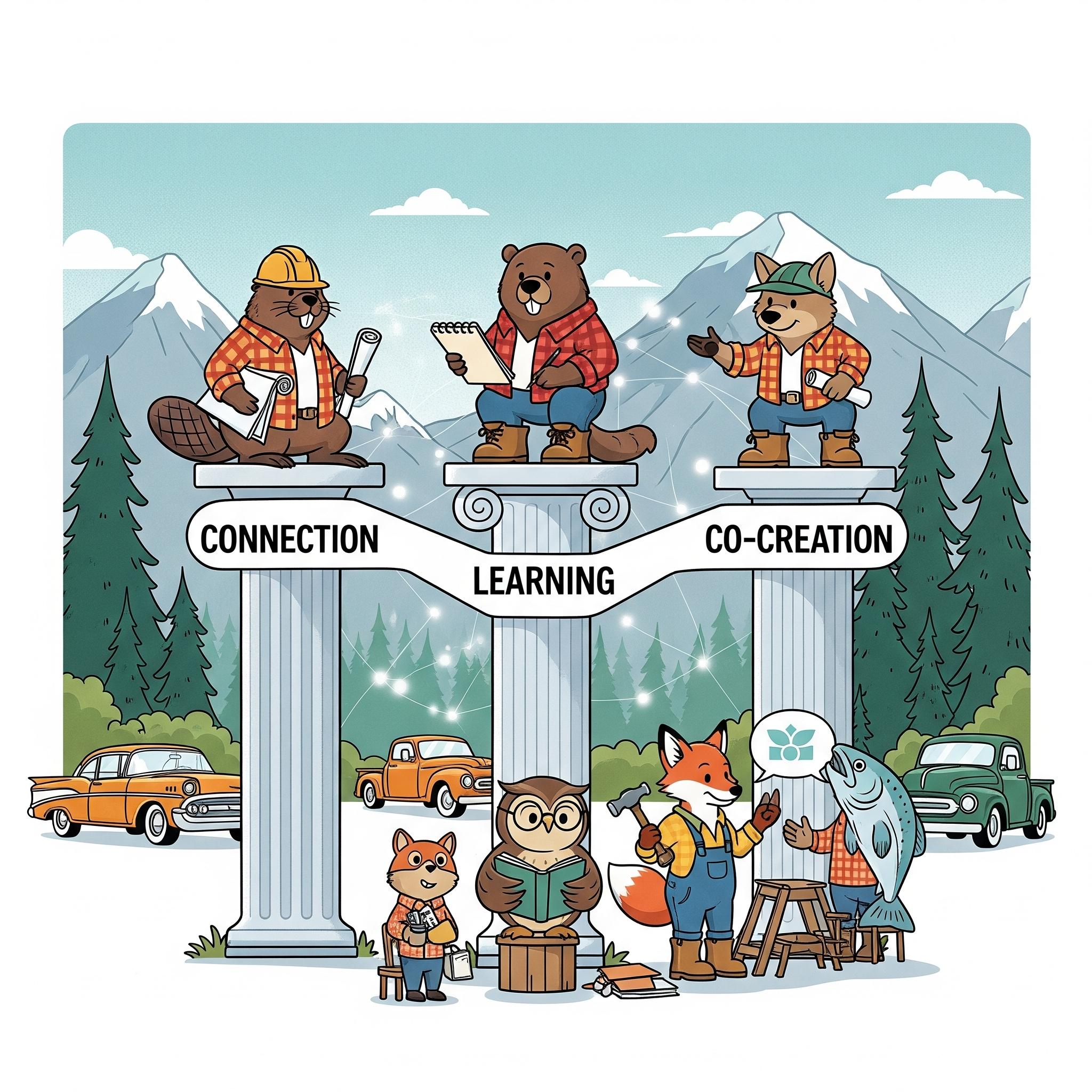
Three Pillars Framework

The Three Pillars of Magnetic Communities

Pillar 1: Connection

True connection goes far beyond networking or social interaction. It's about creating authentic relationships where people feel genuinely seen, valued, and understood. Research by the NIH shows people with strong social connections have 50% lower anxiety rates and correspondingly high health outcomes.

Key elements include:

  • Structured opportunities for meaningful interaction
  • Safe spaces for vulnerability and authentic sharing
  • Systems that help members discover common ground
  • Regular check-ins that prioritize relationship building over task completion

In our Job Search Council, connection happened when we moved beyond career achievements to share our actual fears about unemployment, financial stress, and professional identity. These vulnerable moments created bonds that lasted far beyond anyone's job search.
Pillar 2: Learning

Magnetic communities become knowledge networks where wisdom flows freely and skills develop naturally. Research at Starmind shows that organizations with effective knowledge sharing can be up to 40% more likely to achieve their goals. This is because they leverage collective intelligence rather than individual expertise alone.

Essential components:

  • Communities of practice around shared challenges
  • Systematic knowledge capture and sharing
  • Mentorship and peer learning opportunities
  • Continuous improvement based on collective experience

Our council members came from diverse industries and career stages. A marketing director taught the group about personal branding. A software product manager shared technical interview strategies. A hiring manager provided insights on salary negotiation. This knowledge sharing created value that no single expert could provide.

Pillar 3: Co-Creation

The most engaging communities empower members to solve problems and build solutions together. A Harvard Business School study showed that collaborative decision-making produces 66% better solutions than individual work. This is because diverse perspectives reveal blind spots and generate innovative approaches.

Core practices include:

  • Collaborative decision-making processes
  • Shared ownership of community challenges
  • Multiple pathways for member contribution
  • Recognition systems that celebrate collective achievements

Rather than passively receiving advice, our council members actively co-created solutions for each other's challenges. We practiced interviews together, reviewed each other's applications, and even shared job leads within our networks. Everyone became both teacher and student, helper and helped.

The Research Behind Magnetic Communities

The science is clear: systematic community building outperforms random activities every time. Teams with psychological safety are 27% more likely to report higher performance, according to a survey by McKinsey, creating environments where honest feedback strengthens rather than threatens relationships.

Consider the power of diverse perspectives. When bias mitigation is implemented, diverse teams make better decisions 87% of the time. This isn't about political correctness. As University of Michigan researcher Scott Page notes, "Diversity isn't just politically correct; it's also scientifically correct."

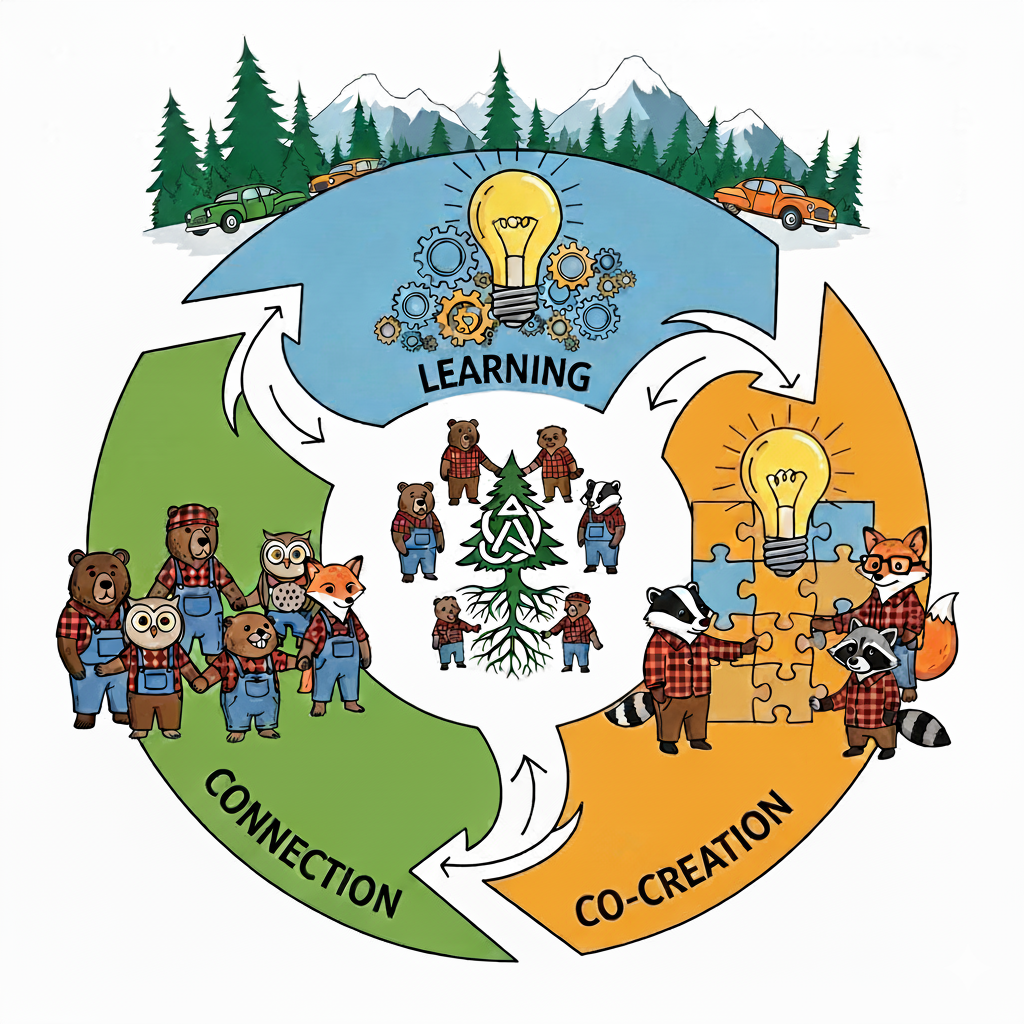
The Three Pillars Framework addresses each of these research findings systematically. Connection creates psychological safety. Learning harnesses collective intelligence. Co-Creation leverages diverse perspectives for better outcomes.

"The success of a team depends less on individual brilliance and more on effective communication."

Simon Sinek, Leadership Expert

This aligns perfectly with what we see in magnetic communities: they excel not because they have the smartest individuals, but because they create systems for smart collaboration.

The Stanford Graduate School of Business Innovation Leadership Studies confirms that "The best ideas often come from the quietest voices in the room." Magnetic communities use structured processes to ensure every voice contributes, not just the loudest or most confident members.

As the Team Dynamics Institute concludes, "When everyone owns the problem, everyone owns the solution." This ownership mentality transforms participants from passive recipients to active co-creators of community success.

Building Your Own Magnetic Community: Three Essential Steps

Step 1: Assess Your Current State (Week 1)

Complete a Three Pillars Assessment to identify which areas need attention. Rate your community's performance on connection quality, knowledge sharing effectiveness, and collaborative decision-making. This baseline helps prioritize improvement efforts.

Step 2: Strengthen Your Weakest Pillar (Weeks 2-4)

Focus on your lowest-scoring pillar first. If Connection needs work, implement structured relationship-building activities like regular check-ins or shared storytelling sessions. If Learning is weak, create communities of practice around shared challenges or establish mentorship programs. If Co-Creation is missing, establish collaborative decision-making processes for upcoming initiatives.

Start small but be intentional. One meaningful change implemented consistently beats multiple scattered efforts.

Step 3: Integrate All Three Pillars (Ongoing)

Design every community activity to strengthen multiple pillars simultaneously. For example, problem-solving sessions can build relationships (Connection), share knowledge (Learning), and generate solutions together (Co-Creation). This integrated approach creates exponential rather than linear improvement.

Track progress monthly using both quantitative metrics (participation rates, retention) and qualitative feedback (member satisfaction, relationship quality). Magnetic communities measure what matters and adjust based on results.

The Choice Is Yours

Magnetic communities aren't accidents or personality-driven phenomena. They're the predictable result of systematically implementing Connection, Learning, and Co-Creation practices backed by decades of research.

The choice facing every community leader is simple: continue relying on good intentions and random activities, or adopt evidence-based approaches that consistently produce engaged, thriving communities.

My Job Search Council succeeded because we unknowingly implemented all three pillars. Your community can achieve similar results by doing so intentionally.

Ready to transform your community into one that naturally attracts and retains engaged members? Northwest Innovation Group offers workshops, training, and consultation services that help organizations implement the Three Pillars Framework systematically.

Related Articles

Growth & Strategy
Smart Growth: How to Expand Your Community Without Losing What Makes It Special

Learn smart growth strategies to expand your community while preserving its core identity.

Read More
Consultation
Creating Psychological Safety in Community Consultations

Learn how to create psychological safety to unlock honest input and diverse perspectives.

Read More

Ready to Apply These Insights?

Let's discuss how our workshops and consulting services can help you implement these strategies in your community.

Schedule a Consultation Read More Articles