What if the biggest drain on your organization's resources isn't overhead or program costs, but something you can't see on your balance sheet? Poor community engagement creates hidden costs that devastate organizations financially and operationally, yet most leaders never calculate the true impact.
The numbers are staggering: nonprofit organizations lose an average of $50,000 annually due to volunteer turnover alone. Fortune 500 companies hemorrhage $250 million per company yearly from poor engagement. When you factor in lost donor relationships, missed opportunities, and constant recruitment cycles, the hidden costs multiply exponentially.
But here's what the research also reveals: communities with strong engagement see 200% better outcomes per dollar invested. Organizations that measure and share impact attract 50% more resources. The solution isn't working harder or cutting costs. It's implementing systematic community building approaches that transform engagement from expense to investment.
Whether you're struggling with volunteer turnover, donor retention, or team engagement, understanding these hidden costs and their solutions can transform your organization's effectiveness and sustainability. The best part? Every dollar invested in systematic community engagement typically returns three to five dollars in value through improved retention, referrals, and impact.
When Numbers Tell the Real Story
I was in my early twenties when I became treasurer of a small community, and the responsibility felt overwhelming. I took the role seriously, maintaining detailed books and ensuring everyone received timely receipts for their contributions.
Over time, serving as treasurer opened my eyes to the real cost of community turnover. We would set ambitious financial goals based on our commitments to various funds we supported, but these targets became impossible to maintain because of constant member changes. The reality was that we were in a college town with many tech companies. Turnover was high in our area. Sometimes our most generous contributors would leave, instantly making our goals unreachable regardless of everyone else's efforts.
The economic situation in our area made things worse. Costs were rising while people struggled financially, unable to give very much. Our repeated failure to hit targets became demoralizing for everyone. Members felt like their contributions didn't matter because we kept falling short of our goals.
That's when I realized we were measuring the wrong things. Instead of focusing solely on dollar amounts, I shifted our emphasis to participation rates. We aimed for 100% engagement with giving, averaged over the year. This metric remained achievable regardless of membership changes and recognized every sacrifice as valuable.
The transformation was remarkable. People became more motivated to give because we celebrated participation rather than just amounts. While we still pursued our financial targets, members felt valued and engaged regardless of their capacity to contribute.
This experience taught me that the hidden costs of poor engagement aren't just financial. They're motivational, cultural, and systemic, creating downward spirals that damage everything an organization tries to achieve.
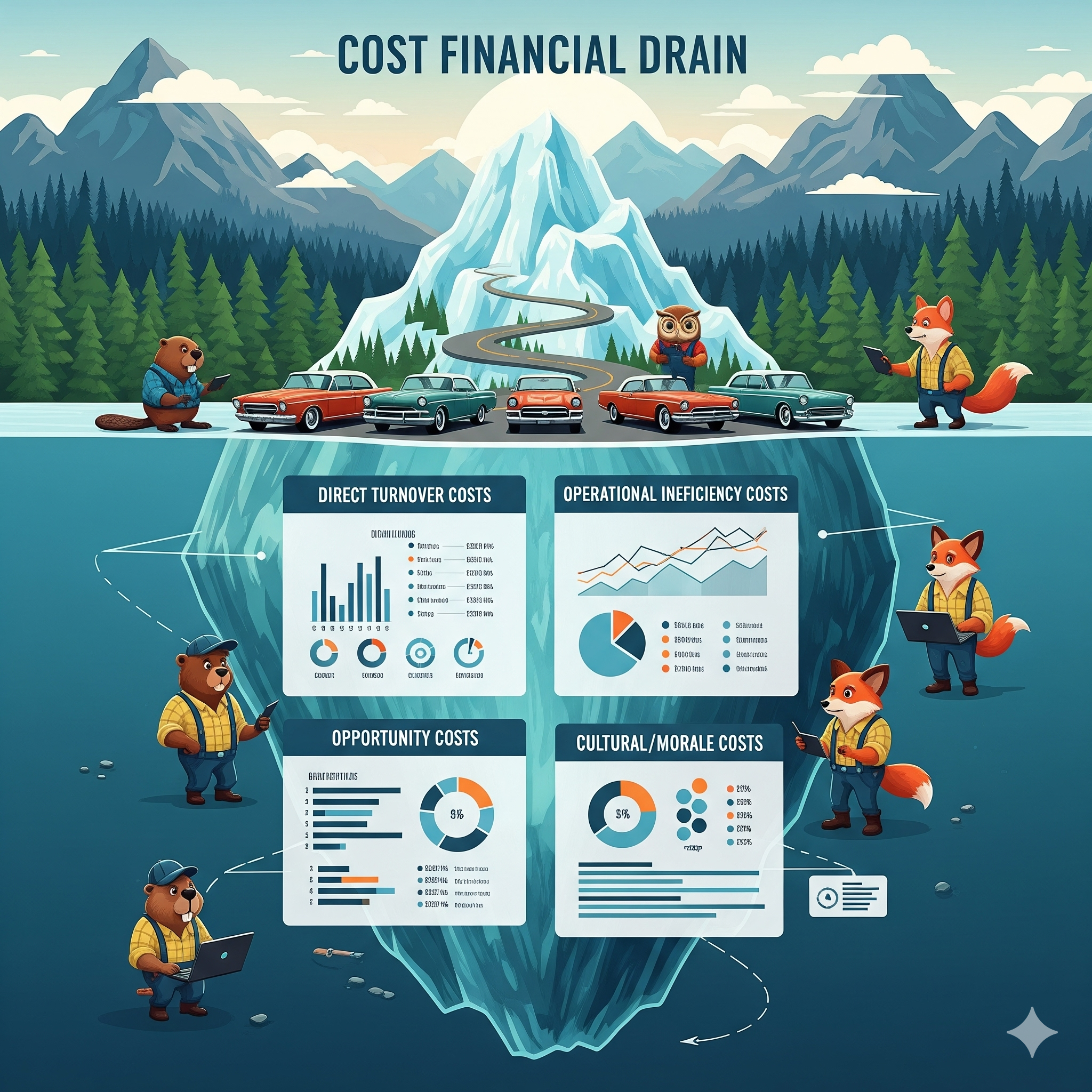
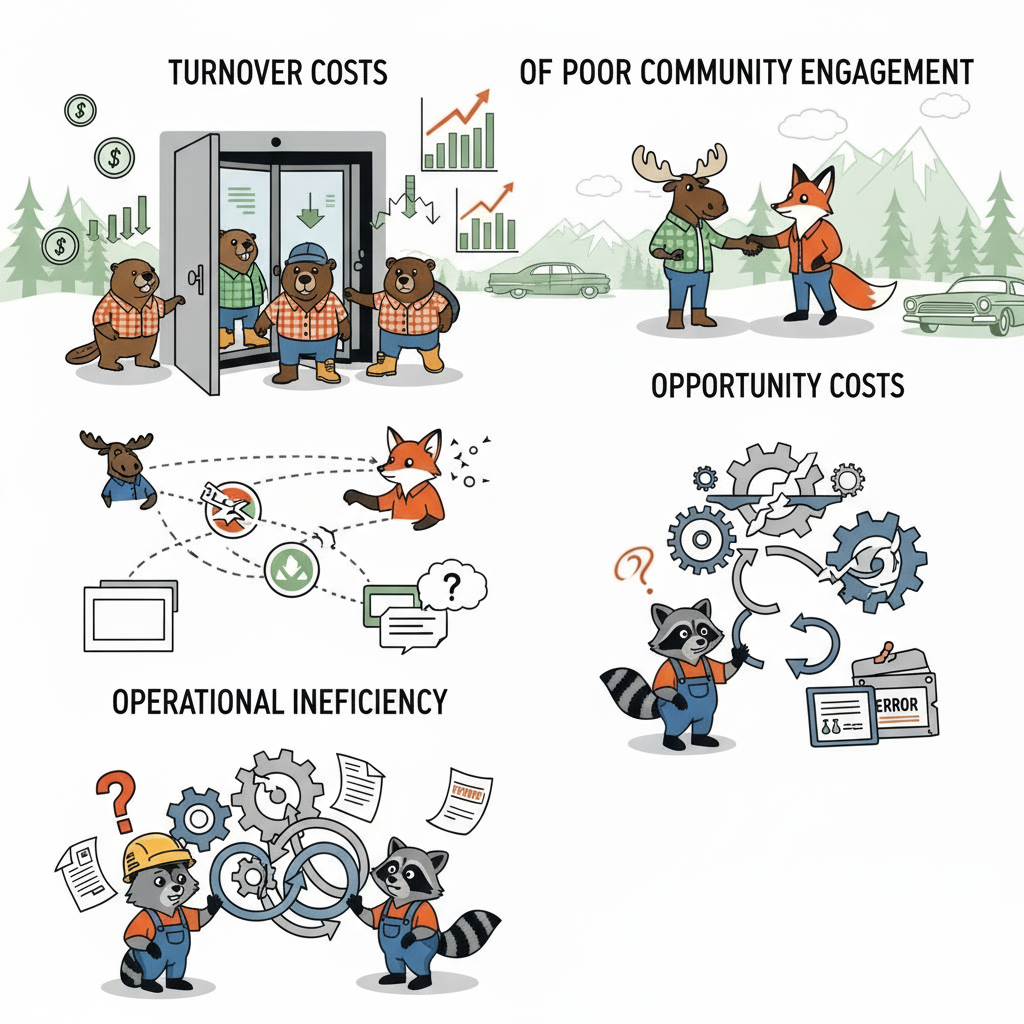
The Four Hidden Cost Categories of Poor Community Engagement
Poor community engagement creates financial damage across four critical areas that most organizations never properly calculate or address systematically.
Category 1: Direct Turnover Costs
The most visible but often uncounted expenses include recruitment, training, and lost productivity when community members leave.
Components include:
- Recruitment advertising and outreach expenses
- Staff time spent interviewing and screening new members
- Onboarding and training costs for replacements
- Lost institutional knowledge and relationship continuity
- Reduced productivity during transition periods
Real cost calculation:
Each volunteer departure costs an average of $1,500 in replacement expenses, according to Independent Sector research. With volunteer turnover rates averaging 40-60% annually, a community with 100 volunteers loses $60,000-$90,000 yearly to turnover alone.
In my small community, I watched this pattern repeatedly. Every time someone left, we not only lost a source of financial contributions, but also some of our momentum and enthusiasm that was challenging to rebuild. The treasurer role taught me to quantify these "soft costs" that never appeared on our budget reports.
Category 2: Opportunity Costs
Disengaged community members represent unrealized potential that compounds over time through missed connections, underutilized skills, and reduced referral generation.
Hidden impacts include:
- Underutilized skills and expertise that could enhance programs
- Missed networking opportunities and professional connections
- Reduced word-of-mouth marketing and referral generation
- Lost innovation and creative problem-solving capacity
- Diminished community reputation and external relationships
Organizations with high engagement rates generate 3x more referrals and new member acquisition through existing community networks. In our community, engaged members became our best ambassadors, bringing friends and family who shared similar values and commitment levels. So keeping them enthusiastic was more than just a financial need. It affected all aspects of our growth and development.
Category 3: Operational Inefficiency Costs
Poor engagement creates administrative burden, communication challenges, and duplicated efforts that drain resources without generating value.
Efficiency drains include:
- Constant recruitment and onboarding processes
- Repeated training for new members who don't stay long-term
- Communication overhead for disengaged audiences
- Administrative time managing turnover and transitions
- Meeting and planning time that doesn't generate lasting outcomes
Studies show that organizations with systematic engagement approaches reduce administrative overhead by 30-40% while improving outcomes. When we shifted to participation-based metrics, our administrative burden decreased because we spent less time adjusting to changing financial targets and more time celebrating actual engagement.
Category 4: Cultural and Morale Costs
Low engagement creates negative feedback loops that damage organizational culture, reduce staff effectiveness, and create burnout among remaining committed members.
Cultural impacts include:
- Decreased motivation among long-term members who feel unsupported
- Staff burnout from constant recruitment and relationship rebuilding
- Reduced sense of community and shared purpose
- Lower overall organizational resilience during challenges
- Difficulty attracting high-quality new members and leaders
Research from the Society for Human Resource Management shows that 30% of nonprofit employees experience burnout, often directly related to community engagement challenges. The emotional toll of constant turnover affected everyone in our community, not just the people leaving.
The Research Behind Community Engagement ROI
The evidence for systematic community engagement investment is overwhelming. VolunteerMatch Economic Impact Study research shows that nonprofit organizations lose an average of $50,000 annually due to volunteer turnover, while Points of Light Foundation data reveals that organizations forfeit $15,000-$50,000 yearly in potential community engagement value.
The scale becomes even more dramatic in larger organizations. Gallup's State of the Global Workplace research documents that poor community engagement costs Fortune 500 companies $250 million annually per company through reduced productivity, higher turnover, and missed opportunities.
But the positive impact of systematic engagement is equally compelling. Social Innovation Review research demonstrates that communities with strong engagement see 200% better outcomes per dollar invested. This isn't just about efficiency; it's about exponential returns on relationship investment.
Independent Sector's Value of Volunteer Time Study provides crucial context: "Each volunteer hour is worth $31.80, and the average volunteer commits 52 hours annually." This means each engaged volunteer contributes approximately $1,650 in value yearly. Organizations that improve retention from 50% to 80% effectively gain $495 per volunteer in additional value.
"Organizations that measure and share impact attract 50% more resources."
Dan Pallotta, nonprofit thought leader, captures the strategic imperative: "It's time to stop obsessing about overhead and start focusing on progress." This shift from cost management to value creation defines successful community engagement approaches.
Amy Castator, nonprofit professional, adds human perspective: "Working in the impact space... Learning to take care of ourselves is such an important part of any nonprofit professional's journey." Systematic engagement benefits both community members and staff who support them.
The Nonprofit Leadership Impact Study reveals the acquisition challenge: 47% of nonprofit leaders report donor acquisition as their greatest challenge, highlighting the cost of constantly replacing rather than retaining community members.
Society for Human Resource Management research adds urgency: "The nonprofit sector employs more than 10 percent of the nation's workforce with 30 percent burnt out." This burnout often stems directly from the exhausting cycle of poor engagement and constant member replacement.
Three Steps to Calculate and Address Hidden Engagement Costs
Step 1: Conduct a Complete Cost Analysis (Week 1-2)
Calculate the true financial impact of poor engagement across all four cost categories. This baseline assessment will justify investment in systematic engagement improvements and provide metrics for measuring progress.
Cost calculation framework:
- Document current turnover rates for volunteers, donors, and members
- Calculate recruitment and training costs per person (average $1,500 per volunteer) if applicable
- Estimate opportunity costs from underutilized skills and missed referrals
- Assess administrative time spent on turnover-related activities
- Evaluate cultural costs through staff satisfaction and burnout indicators
Practical calculation example:
If your organization has 100 volunteers with 50% annual turnover, you're losing 50 people yearly. At $1,500 per replacement, that's $75,000 in direct costs. Add opportunity costs (missed referrals, underutilized skills), operational inefficiencies (extra administrative time), and cultural costs (staff burnout, reduced morale), and the total often exceeds $150,000 annually.
Step 2: Implement Systematic Retention Strategies (Week 3-8)
Address the root causes of poor engagement through systematic improvements to onboarding, ongoing value creation, and feedback systems that prevent problems before they lead to departure.
Essential retention elements:
- Redesign onboarding to harness immediate value through involvement in connection, learning, and co-creation efforts
- Establish regular check-ins during the critical first 90 days
- Create meaningful roles that utilize individual skills and interests
- Implement feedback systems that address concerns before they escalate
- Develop recognition programs that celebrate contributions appropriately
Focus on participation over perfection:
Like our shift to participation-based metrics, create systems that recognize all contributions rather than just the largest or most visible ones. This approach maintains engagement across diverse capacity levels and economic circumstances.
Step 3: Measure ROI and Optimize (Week 9-12)
Track both cost reductions and value improvements to demonstrate the financial return on engagement investments. Use this data to justify continued investment and guide optimization efforts.
Key metrics to monitor:
- Retention rate improvements across different community segments
- Reduction in recruitment and training costs
- Increase in referrals and word-of-mouth acquisition
- Improvement in administrative efficiency and staff satisfaction
- Growth in overall community value and impact generation
ROI calculation framework:
Compare your baseline costs from Step 1 with improvements after implementing retention strategies. Most organizations see 3:1 to 5:1 returns on systematic engagement investments within the first year.
Transforming Costs into Competitive Advantage
The hidden costs of poor community engagement represent one of the largest drains on organizational resources, yet they remain invisible to most leaders because they're never properly calculated or addressed systematically. When you add up turnover costs, opportunity losses, operational inefficiencies, and cultural damage, the financial impact can dwarf traditional budget line items.
My experience as a young treasurer taught me that engagement isn't just about keeping people happy. It's about creating sustainable systems that generate value for everyone involved. When communities focus on participation over just financial targets, they create positive feedback loops that strengthen both relationships and results.
The shift from measuring dollars to measuring participation transformed our community's culture. Members felt valued regardless of their financial capacity, which actually increased both engagement and giving over time. People who felt appreciated for their participation became more committed to supporting the community in every way they could.
The research is clear: systematic community engagement isn't an expense. It's an investment that typically returns three to five dollars for every dollar spent through improved retention, increased referrals, and enhanced organizational effectiveness.
Ready to calculate your hidden engagement costs and implement systematic solutions? Northwest Innovation Group offers workshops and consultation services that help organizations transform engagement from expense to strategic advantage.
Start your cost analysis:
Submit a project through our website to explore engagement strategies for your specific context, attend one of our community building workshops, or schedule consultation to develop your customized engagement improvement plan. Let's help your organization capture the full value of strong community relationships while reducing the hidden costs that drain resources and energy.