What if the most transformative period in community building history wasn't caused by a breakthrough innovation, but by a global crisis that forced us to reimagine human connection? The 2020 pandemic accelerated digital community building by a decade, teaching us invaluable lessons about creating meaningful relationships across screens and time zones.
Research reveals remarkable changes: virtual community engagement increased 400% during 2020-2024, while organizations with strong virtual consultation practices retain remote talent 67% better. Remote teams using systematic consultation principles show 38% higher engagement than traditional virtual meetings.
The revolution isn't just about moving meetings online. It's about fundamentally reimagining how communities connect, learn, and co-create together using digital tools that enhance rather than replace human connection.
Whether you're managing a distributed team, leading a nonprofit with members across multiple locations, or building any community that needs to thrive in both digital and physical spaces, these lessons from the remote work revolution can transform your approach to community engagement.
The best part? Digital-first community building isn't about choosing between virtual and in-person experiences. It's about creating hybrid approaches that amplify the strengths of both while serving people wherever they are.
When Crisis Becomes Catalyst for Innovation
I was part of a community during the Covid pandemic when everything changed overnight. Like many groups, we were told not to have gatherings in-person for over a year. The community quickly came together to find different ways for us to gather online using meeting software and video cameras.
It was challenging for many members who were not used to technology or who had a hard time hearing over speakers. It was especially difficult for people who struggled with English as they did not have anyone near them who could translate. But we got through the experience together.
When we could meet in person again, we came back like we hadn't seen each other in forever. We realized how precious it was to have a physical community and many of us had renewed commitment to making our in-person experience amazing.
Additionally, we had developed new skills in hosting meetings online, which meant that even more people could attend if we offered a videoconference version. People who were too old or sick to attend could now participate from home. When community members got sick, they could self-quarantine and still participate.
In the end, while the overall experience of the pandemic was very challenging, it provided a small silver lining. It helped us improve our resilience in the face of disruption, develop our technology sophistication, renew our appreciation for our meetings, and increase overall participation.
This experience taught me that digital-first community building isn't about replacing in-person connection. It's about expanding access and creating multiple pathways for meaningful engagement that serve people wherever they are and whatever their circumstances.
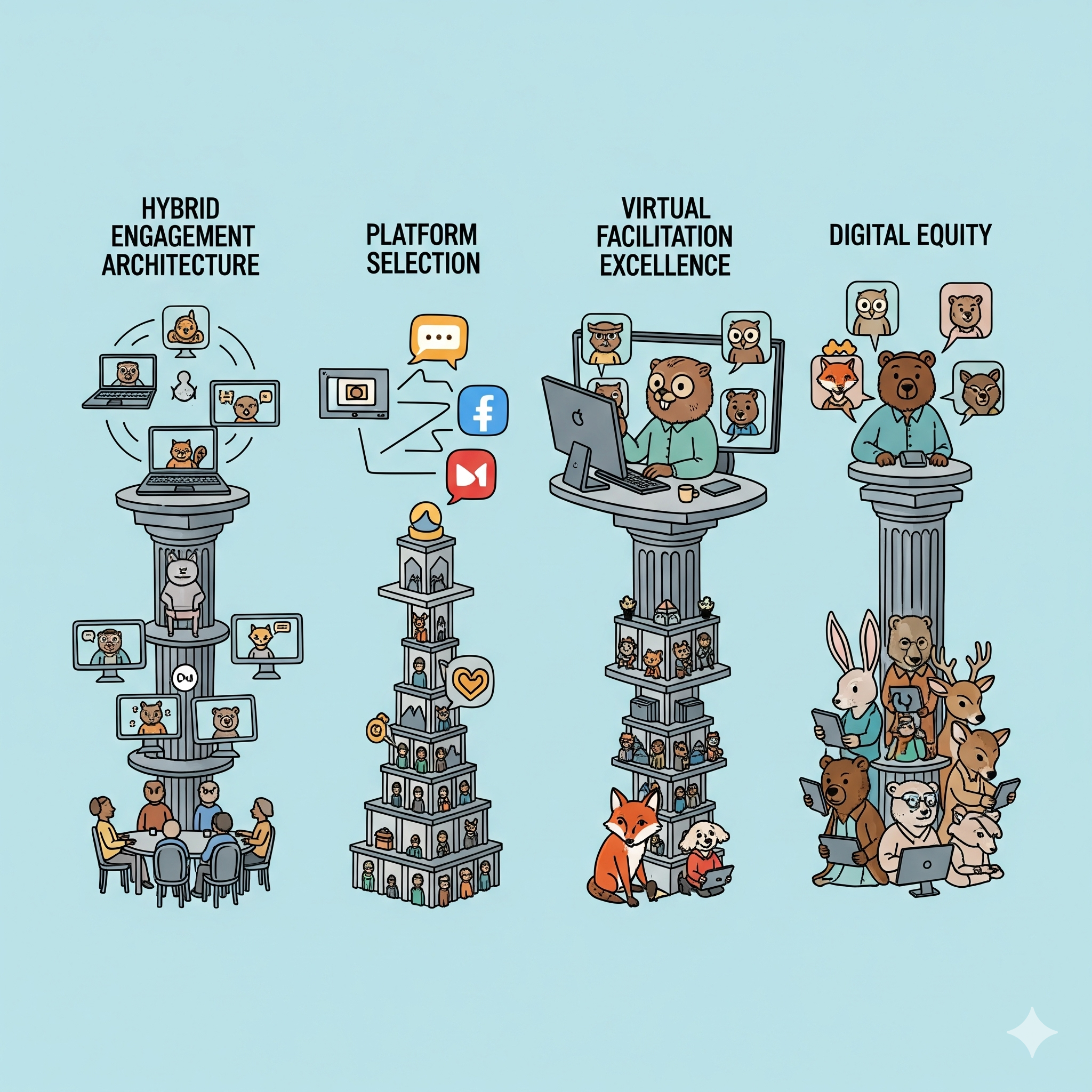
The Four Pillars of Digital-First Community Building
Successful digital communities aren't just in-person communities moved online. They require fundamentally different approaches that leverage technology's unique strengths while preserving the human connection that makes communities thrive.
Pillar 1: Hybrid Engagement Architecture
Digital-first communities create seamless experiences that blend virtual and physical participation without creating second-class citizenship for either group. This requires intentional design that serves both participation modes equally well.
Key elements include:
- Simultaneous virtual and in-person participation options
- Technology that enables real-time interaction between digital and physical participants
- Content and activities designed to work equally well in both formats
- Communication systems that keep all community members informed regardless of participation mode
In our community, we discovered that hybrid meetings actually increased overall participation because they accommodated different life circumstances. Parents with sick children could participate from home. Elderly members with mobility challenges stayed connected. People traveling for work didn't miss important discussions.
Implementation strategies:
- Invest in quality audio-visual equipment that makes virtual participants feel present
- Design activities that engage both virtual and in-person participants simultaneously
- Rotate between in-person and virtual hosting to maintain energy in both spaces
- Create pre and post-meeting connection opportunities for relationship building
During our online experience, we used many of the evolving features to break up into smaller groups for discussion and sharing. This created an opportunity for more personal experiences, and it was something we tried to continue to offer to people after we could also meet in person. The key insight is that hybrid architecture isn't about broadcasting in-person meetings to remote audiences. It's about creating experiences where both groups can contribute meaningfully and feel equally valued.
Pillar 2: Platform Selection and Integration
The right technology platform can enhance community connection, while the wrong choice creates barriers and frustration that damage relationships. Platform selection becomes a strategic decision that affects every aspect of community engagement.
Essential considerations:
- Accessibility features for community members with different technical comfort levels
- Integration capabilities that connect various community tools and platforms
- Scalability that accommodates community growth without forcing platform changes
- Cost structures that align with community resources and values
The lesson from our pandemic transition was that platform selection matters less than implementation quality. We succeeded because we focused on helping people connect rather than showcasing technology features. In our community, we learned to provide captions for those who did not hear well. And we provided digital copies of documents we were reading in multiple languages for those who did not speak English well.
Selection criteria:
- Ease of use for your least technical community members
- Reliability during peak usage times and important events
- Support resources that help community members troubleshoot problems
- Privacy and security features that protect community member information
Remember that the best platform is the one your community will actually use consistently. Sophisticated features mean nothing if they create barriers that prevent authentic participation.
Pillar 3: Virtual Facilitation Excellence
Leading effective virtual communities requires different skills than in-person facilitation. Digital environments change group dynamics in subtle but important ways that skilled facilitators learn to navigate successfully.
Core skills include:
- Energy management techniques that maintain engagement across screens
- Structured participation methods that ensure equal voice in digital spaces
- Technology troubleshooting abilities that keep meetings flowing smoothly
- Relationship building approaches that work in virtual environments
During our virtual gatherings, we learned that successful online facilitation requires more intentional structure and more frequent check-ins to maintain connection and engagement. Without the natural energy cues of physical presence, facilitators must work harder to read the room and adjust accordingly.
Implementation techniques:
- Use smaller breakout groups to increase participation and intimacy
- Implement regular "temperature checks" to assess energy and engagement levels
- Create clear protocols for managing technical difficulties without derailing meetings
- Develop pre-meeting rituals that help people transition into community space
The most effective virtual facilitators master the art of creating presence rather than just participation. They help people feel genuinely connected despite physical distance.
Pillar 4: Digital Equity and Inclusion
Digital-first communities must actively address technology gaps that can exclude community members based on access, comfort level, or economic circumstances. This pillar ensures that digital transformation creates inclusion rather than new barriers.
Critical elements:
- Technology support programs that help community members develop necessary skills
- Equipment lending or subsidy programs for those who need technical resources
- Multiple participation options that accommodate different comfort levels with technology
- Patient, non-judgmental approaches to helping people navigate digital tools
Our community's approach of pairing tech-savvy members with those who needed support created mentorship relationships that strengthened our bonds while solving practical problems. These partnerships became sources of ongoing connection and mutual learning.
Equity strategies:
- Conduct technology needs assessments to understand community barriers
- Provide training sessions specifically designed for different skill levels
- Create support networks that pair experienced users with newcomers
- Maintain non-digital communication and engagement options alongside virtual ones
Digital equity isn't just about providing access to technology. It's about ensuring that technology enhances rather than replaces the human relationships that make communities meaningful.
The Research Behind Digital Community Success
The evidence for digital-first community building effectiveness is compelling when done systematically. MIT Technology Review research shows that hybrid consultation meetings achieve 92% of in-person effectiveness when properly facilitated, dispelling myths about digital interaction quality.
The Community Engagement Survey reveals changing preferences: 65% of community members prefer hybrid engagement options over purely in-person activities. This preference shift makes digital-first approaches essential rather than optional for thriving communities.
Harvard Business Review research documents retention benefits: organizations with strong virtual consultation practices retain remote talent 67% better. This retention advantage applies to volunteers, members, and participants across community types.
Remote Work Research Institute provides engagement metrics: remote teams using consultation principles show 38% higher engagement than traditional virtual meetings. This demonstrates that systematic approaches to digital interaction create measurable improvements.
"Distance means nothing when the conversation has meaning."
Matt Mullenweg, CEO of Automattic, provides essential perspective: "Technology is best when it brings people together." This principle guides effective platform selection and implementation that serves human connection rather than impressing with features.
The Digital Transformation Institute identifies the strategic opportunity: "The future belongs to organizations that can collaborate effectively anywhere." This capability becomes competitive advantage as work and community participation patterns continue evolving.
Pew Research Center confirms the scale of change: virtual community engagement increased 400% during 2020-2024. This dramatic shift represents permanent behavior change rather than temporary pandemic adjustment.
Three Steps to Build Digital-First Community Capability
Step 1: Assess Your Community's Digital Readiness (Week 1-2)
Conduct comprehensive assessment of your community's current digital capabilities, member technology comfort levels, and infrastructure needs before implementing new approaches. This foundation phase prevents costly mistakes and ensures implementations meet actual needs.
Assessment areas to evaluate:
- Technology comfort and access levels among community members
- Current platform effectiveness and integration capabilities
- Digital facilitation skills among community leaders
- Existing gaps in digital equity and inclusion support
- Infrastructure requirements for high-quality hybrid experiences
Key questions to answer:
- What percentage of your community has reliable internet access and appropriate devices?
- Which community members struggle most with current digital tools and why?
- How do virtual participants currently experience your community activities compared to in-person attendees?
- What technology support resources exist and what additional help is needed?
- Which digital platforms currently work well and which create barriers or frustration?
Start with honest assessment rather than assumptions. Many communities discover that their digital readiness differs significantly from leadership perceptions. Use surveys, interviews, and observation to gather comprehensive data about actual capabilities and needs.
Step 2: Design Your Hybrid Engagement Model (Week 3-6)
Create systematic approaches to blending virtual and physical participation that serve both groups equally well while maximizing community connection and engagement. This design phase requires careful attention to equity and inclusion.
Design elements to develop:
- Meeting formats that engage both virtual and in-person participants simultaneously
- Technology setup that creates seamless interaction between digital and physical spaces
- Communication systems that keep all community members informed and connected
- Activity structures that work equally well in virtual, hybrid, and in-person formats
- Relationship building approaches that transcend participation mode differences
Implementation priorities:
- Invest in quality audio-visual equipment that makes virtual participants visible and audible to in-person attendees
- Train facilitators in hybrid meeting management and energy maintenance techniques
- Create structured participation methods that ensure equal voice regardless of participation format
- Develop pre and post-meeting connection rituals that work across digital and physical boundaries
- Establish clear protocols for technical support and troubleshooting during community activities
Focus on creating experiences where participation mode becomes invisible. The goal is seamless integration where virtual and in-person participants contribute equally and feel equally valued.
Step 3: Build Digital Facilitation and Support Capabilities (Week 7-12)
Develop systematic training and support systems that help community leaders excel at digital facilitation while ensuring all members can participate effectively. This capacity building phase creates sustainable digital community capabilities.
Capability building areas:
- Virtual facilitation skill development for community leaders and volunteers
- Technology support programs for community members who need assistance
- Digital equity initiatives that address access and comfort barriers
- Platform optimization and integration to streamline community member experience
- Ongoing evaluation and improvement systems based on community feedback and participation data
Training and support elements:
- Facilitate workshops on virtual meeting leadership and energy management techniques
- Create mentorship programs that pair tech-savvy members with those who need support
- Develop troubleshooting resources and real-time support systems for technical difficulties
- Establish feedback loops that continuously improve digital experience quality
- Design recognition programs that celebrate both digital participation and support of others' engagement
Remember that digital facilitation is a learned skill that improves with practice and feedback. Invest in developing multiple facilitators so your community isn't dependent on single individuals for digital success.
Building Communities That Thrive Anywhere
Digital-first community building represents a fundamental shift from location-dependent to connection-dependent thinking. The pandemic taught us that meaningful relationships can flourish across screens when we apply systematic approaches that prioritize human connection over technology features.
My community's experience showed that crisis can become catalyst for innovation when communities embrace change with intention and mutual support. By developing new digital capabilities while renewing appreciation for physical gathering, we created stronger, more inclusive community than existed before the pandemic.
The four pillars provide framework for this transformation: hybrid engagement architecture that serves all participation styles, thoughtful platform selection that enhances rather than hinders connection, virtual facilitation excellence that maintains energy and relationship across digital spaces, and digital equity approaches that ensure technology creates inclusion rather than barriers.
The research confirms what many communities discovered through necessity: digital-first approaches aren't compromises. They're competitive advantages that expand access, increase participation, and create resilience that serves communities regardless of future challenges or changing circumstances.
When done well, digital-first community building doesn't replace in-person connection. It amplifies it by creating multiple pathways for engagement while building capabilities that strengthen communities in every format. The goal isn't choosing between digital and physical community. It's creating integrated approaches that serve people wherever they are and however they can best participate.
Ready to develop digital-first community building capabilities? Northwest Innovation Group offers workshops and consultation services that help organizations create effective hybrid engagement models using proven facilitation techniques and technology integration strategies.
Start your digital transformation:
Submit a project through our website to explore hybrid community strategies for your specific context, attend one of our digital community building workshops, or schedule consultation to develop your customized approach to virtual and hybrid engagement. Let's help your community thrive anywhere people gather, whether that's in person, online, or anywhere in between.