Fear that AI will make community building feel cold and impersonal misses a profound opportunity. The reality is quite different: artificial intelligence can help us be more human by removing barriers to authentic connection and collaboration.
As we will show in this article, research reveals that 58% of nonprofits already use AI for communications, with AI-enhanced platforms increasing volunteer satisfaction by 85%. Organizations implementing intelligent technology see 50% reduction in administrative burden while improving relationship quality, not diminishing it.
The key isn't choosing between technology and human connection. It's using AI strategically to amplify what makes communities thrive: meaningful relationships, efficient coordination, and data-driven insights that help us serve people better.
Whether you're struggling with volunteer matching, drowning in administrative tasks, or trying to understand what truly engages your community members, AI offers practical solutions that enhance rather than replace the human elements that matter most.
The best part? You don't need to be a technology expert to get started. These are practical applications you can implement immediately to create more time for relationship building while gaining insights that help your community flourish.
When Local Context Matters More Than Generic Solutions
At one point, I was part of a community that was trying to implement more direct outreach methods. We were assured that all we had to do was follow the example of communities that had supposedly succeeded elsewhere with these methods.
But we were skeptical. We knew other groups had already created negative associations with such approaches in our neighborhood and we could see the direct methods would be perceived as aggressive in our area.
But we were good soldiers, and tried these 'new' methods anyway. We ended up knocking on doors of our neighbors and offering our message to people who had never heard of us. While most people were polite, there was zero interest or engagement. Unfortunately, the results often ended up being worse than if we had done nothing. Many of our neighbors were now convinced we were in a strange cult and stopped talking to us.
The fact is, we knew our neighbors and our communities best. We understand that our situation was different. We knew how our neighbors would interpret things based on how other groups had behaved. But sadly, we didn't listen to our instincts or look into the data that was right in front of us. We blindly mimicked approaches that, we were told, had worked elsewhere.
This taught me a crucial lesson: data, context, and experience should inform our approaches, not dictate them. We need insights about our specific community before we implement generic solutions from elsewhere. At the time, we didn't have the data to push back. But today I think we could have seen this coming even better. For example, had we used AI tools to analyze local engagement patterns, community sentiment, and cultural context, we might have discovered better ways to connect with our neighbors around shared values and common interests.
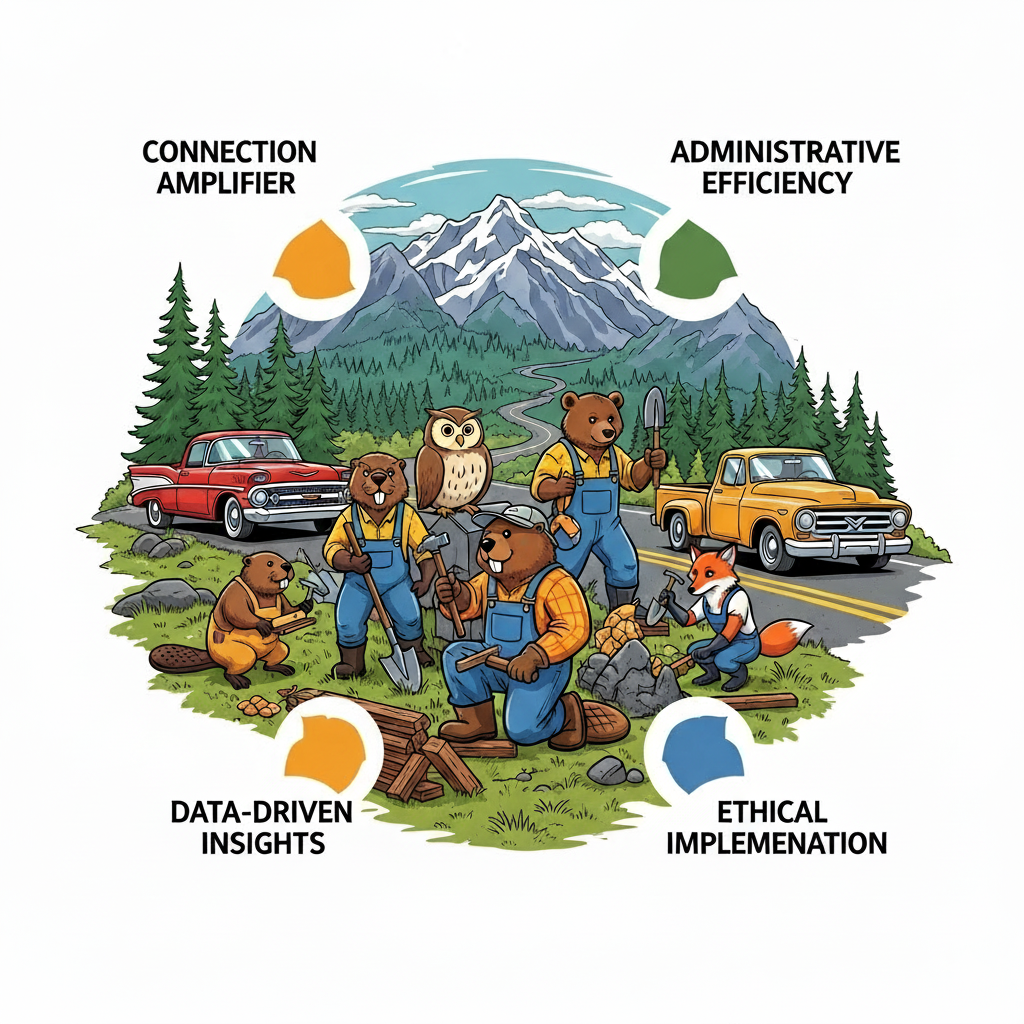
The Four Pillars of AI-Enhanced Community Building
Pillar 1: Technology as Connection Amplifier
AI doesn't replace human relationships. It reveals hidden connections that were always there and removes friction that prevents authentic engagement. According to the National Library of Medicine, a study of volunteer first repsonders used machine learning algorithms to predict volunteer engagement with 79% accuracy. This type of technology can be used to help organizations identify effective methodds to match people with opportunities that truly fit.
Key applications include:
- Intelligent volunteer matching based on skills, values, and availability
- Automated scheduling that considers personal preferences and constraints
- Communication tools that personalize outreach without losing authenticity
- Pattern recognition that identifies optimal timing for community engagement
In our outreach situation, AI sentiment analysis could have revealed that our neighbors valued environmental stewardship and community service. Instead of door-to-door evangelism, we could have organized neighborhood cleanup events or community garden projects that aligned with shared values.
Pillar 2: Administrative Efficiency Creation
Organizations using AI see 50% reduction in administrative burden, freeing staff to focus on relationship building rather than routine tasks. This isn't about eliminating jobs. It's about eliminating busywork.
Essential components:
- Automated data entry and record keeping
- Smart scheduling and calendar coordination
- Intelligent email sorting and response prioritization
- Streamlined donation processing and donor management
Think about how much time your team spends on scheduling meetings, updating databases, and managing routine communications. AI can handle these tasks seamlessly, creating space for the meaningful conversations and relationship building that actually grow communities.
Pillar 3: Data-Driven Community Insights
AI analytics reveal patterns about community health and engagement that human observation alone might miss. This helps leaders make informed decisions about resource allocation and program development.
Core practices include:
- Engagement pattern analysis to identify optimal outreach timing
- Sentiment analysis of community feedback and communications
- Predictive modeling for volunteer retention and donor behavior
- Community health dashboards showing relationship strength metrics
Had we used these insights in our community, we might have discovered that our neighbors were most receptive to community connections through local school events, environmental initiatives, or neighborhood safety programs rather than direct outreach they didn't ask for.
Pillar 4: Ethical Implementation Guidelines
Successful AI implementation requires clear ethical frameworks that prioritize human dignity and authentic relationships. Technology should serve community values, not override them.
Critical elements:
- Transparency about how AI tools collect and use community data
- Human oversight for all AI-generated recommendations and decisions
- Regular assessment of AI impact on relationship quality
- Feedback systems that allow community members to influence AI applications
The ethical dimension becomes crucial when dealing with sensitive community data and ensuring that AI recommendations align with your organization's values and the genuine needs of the people you serve.
The Research Behind AI-Enhanced Community Building
The evidence shows that fears about AI dehumanizing community work are largely unfounded when technology is implemented thoughtfully. TechSoup research reveals that 58% of nonprofits already use AI for communications and outreach, with positive results for both organizations and community members.
Nils Smith from Dunham+Company explains the reality: "AI is not here to replace human-driven efforts but to support and enhance them. By automating routine tasks, analyzing data for better decision-making, and improving communication strategies, AI helps nonprofits work smarter, not harder."
The TechSoup Research Team confirms this perspective: "For nonprofits, AI isn't about replacing people but rather empowering them to do more with less." Their studies show organizations using AI see 50% reduction in administrative burden while maintaining or improving relationship quality.
Practical results support these claims. AI-enhanced platforms increase volunteer satisfaction by 85%, according to VolunteerMatch Impact Report. AI matching systems increase long-term volunteer retention by 70%, as documented by Points of Light Foundation research.
"Technology is best when it brings people together rather than driving them apart."
This aligns with MIT Technology Review findings that "The future belongs to organizations that can collaborate effectively anywhere, enhanced by intelligent technology."
LinkedIn Community Research adds practical insight: "AI can streamline volunteer recruitment by automating tasks while maintaining the human touch that matters most." The key is implementation that serves human connection rather than replacing it.
Three Steps to Implement AI-Enhanced Community Building
Step 1: Start Small with High-Impact Applications (Week 1-2)
Choose one specific AI application that addresses your biggest operational pain point. Popular starting points include volunteer matching platforms, automated scheduling tools, or donor management systems. Focus on solutions that save time rather than trying to revolutionize everything at once.
Evaluate options based on:
- Which tasks consume the most staff time currently?
- Where do bottlenecks prevent community members from engaging?
- What data do you already collect that could inform better decisions?
- Which processes would benefit most from personalization at scale?
Step 2: Establish Ethical Guidelines and Training (Week 3-4)
Develop clear policies for AI use that prioritize human dignity and relationship quality. Train team members on new tools and create feedback systems that allow community members to influence how technology is used. Ensure human oversight for all AI-generated recommendations.
Essential elements include:
- Transparent communication about AI tool usage with community members
- Regular review sessions to assess AI impact on relationship quality
- Clear escalation processes when AI recommendations conflict with human judgment
- Community feedback mechanisms for technology improvement
Step 3: Measure Impact on Relationships (Ongoing)
Track both efficiency gains and relationship quality metrics. Monitor volunteer satisfaction, engagement levels, and community feedback about technology use. Adjust AI applications based on their impact on authentic human connection rather than just operational efficiency.
Key success factors:
- Choose tools that enhance existing strengths rather than covering weaknesses
- Maintain transparency about AI use with community members
- Create feedback loops that continuously improve AI-human collaboration
- Remember that technology should serve your community's values, not drive them
Building Technology That Serves Human Flourishing
AI-enhanced community building isn't about replacing human connection with technology. It's about using intelligent tools to create more space for authentic relationships while gaining insights that help us serve people better.
The research is clear: organizations that implement AI thoughtfully see improved efficiency, better volunteer matching, and stronger community engagement. But success requires starting with community values and using technology to amplify rather than replace what makes relationships meaningful.
My experience taught me that blindly copying approaches from other communities fails. But using data and technology to understand our specific context and create personalized solutions can transform how we build relationships. Instead of door-to-door outreach that alienated our neighbors, we could have used AI insights to discover shared values and create genuine opportunities for community connection.
Ready to explore AI-enhanced community building for your organization? Northwest Innovation Group offers workshops and consultation services that help you implement technology solutions while maintaining the human connection that makes communities thrive.
Start your AI journey:
Submit a project through our website, attend one of our technology integration workshops, or schedule a consultation to develop your customized approach to AI-enhanced community engagement. Let's help your community harness technology that amplifies rather than replaces the human connections that matter most.