Consultation

The Consultation Revolution: Why Better Meetings Create Stronger Communities

Discover how the consultation revolution transforms meetings from time-wasters into community-building powerhouses. Learn the seven principles that create stronger decisions and deeper engagement.

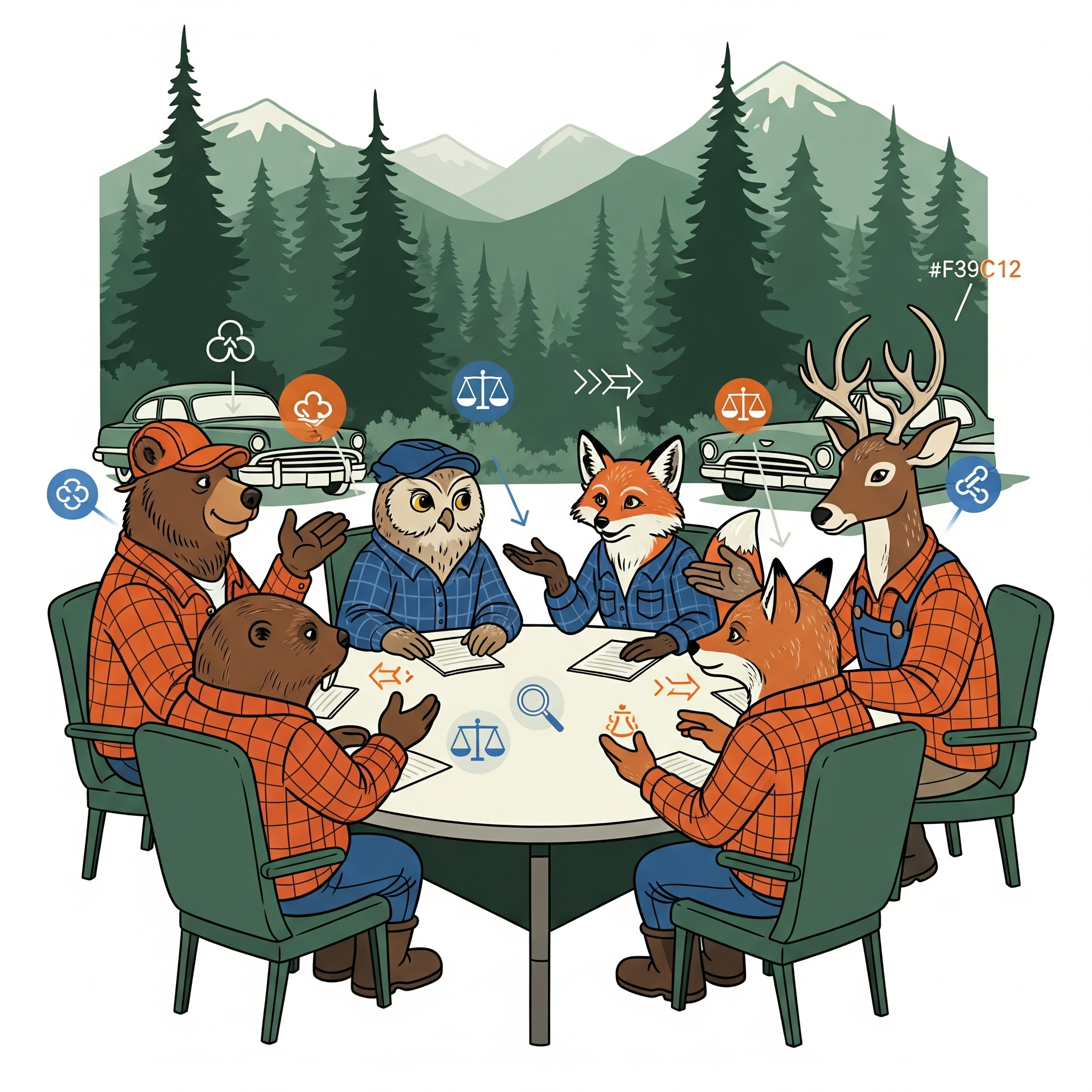
Consultation Revolution Cover

What if the most dreaded hour of your week could become the most powerful tool for building community? The truth is startling: $37 billion is lost annually in the U.S. due to ineffective meetings, yet organizations using consultation meeting formats see 47% increases in satisfaction scores and 60% faster implementation.

The consultation revolution isn't about having fewer meetings or shorter agendas. It's about transforming how groups think together using seven proven principles that eliminate hierarchy-driven dysfunction and create genuine collaboration. As we will show in this article, communities implementing these approaches see remarkable results: 89% of participants recommend consultation methods to others, and teams experience dramatic improvements in both decision quality and relationship strength.

Whether you're facilitating board meetings, leading community planning sessions, or managing any group decision-making process, consultation principles can transform your meetings from time-wasting exercises into community-building experiences that generate real outcomes.

The best part? These aren't complex methodologies requiring extensive training. They're practical frameworks you can implement in your next meeting to immediately improve both process and results while strengthening the relationships that make communities thrive.

When Leadership Means Making Hard Choices

I was 24 years old and serving as chairman of our local community council when I faced one of the most challenging group dynamics I've ever encountered. We had a council member who was mentally unstable and extremely rude to other participants. Most of us didn't speak her language, so we were unaware of the severity of her behavior until it reached a breaking point.

One gentle council member who understood her language had been silently enduring her insults and name-calling week after week. During one particularly difficult meeting, he finally reached his limit. He stood up, threw his chair across the room, and declared he was leaving our community forever.

As the young chairman, I faced a choice that would define my understanding of group dynamics forever. I could ignore the problem and hope it resolved itself, or I could step into the discomfort of establishing boundaries for the health of our community.

I chose to confront the situation with as much love and patience as I could muster, but I made it clear that treating fellow community members with disrespect would not be tolerated. If the behavior continued, we would adjourn the meeting to protect everyone's wellbeing.

This experience taught me that consultation isn't just about polite discussion techniques. It's about creating psychologically safe spaces where every voice can contribute constructively. Sometimes that means establishing firm boundaries. Sometimes it means pausing when dynamics become unhealthy. But always, it means prioritizing the collective good over individual comfort.

That crisis became the foundation for everything I've learned about transforming meetings from battlegrounds into collaborative spaces where communities actually get stronger.

Seven Principles of Consultation

The Seven Principles of the Consultation Revolution

The consultation revolution rests on seven fundamental principles that transform how groups make decisions together. Unlike traditional meeting formats that rely on hierarchy or the loudest voice winning, consultation creates systematic frameworks for harnessing collective intelligence.

Principle 1: Spirit of Service and Adding Value

Every participant enters consultation committed to serving the collective good rather than advancing personal agendas. This mindset shift eliminates much of the ego-driven conflict that destroys productive meetings.

Implementation strategies:

  • Begin meetings by clarifying shared purpose
  • Ask "How can we serve our community's needs?" rather than "What do I want?"
  • Reward contribution over position or seniority
  • Create space for participants to acknowledge the community they're serving

In our council crisis, this principle would have helped everyone focus on what our community needed rather than defending personal positions or avoiding uncomfortable conversations.

Principle 2: Unity of Purpose

Consultation requires clear, shared understanding of why the group is gathering and what success looks like. Without purpose alignment, even brilliant discussions become exercises in talking past each other.

Implementation strategies:

  • Document meeting objectives that everyone can support
  • Use purpose as the filter for all decisions and discussions
  • Return to purpose when conversations drift off track
  • Create visual reminders of shared goals

Had we established clear purpose around creating a safe, supportive environment for all council members, we might have addressed the problematic behavior before it reached crisis level.

Principle 3: Detachment from Personal Views

Participants present ideas without defensiveness and evaluate proposals on merit rather than who suggested them. This creates space for better ideas to emerge regardless of their source.

Implementation strategies:

  • Separate idea generation from evaluation phases
  • Focus on improving ideas rather than defending them
  • Ask "What would make this proposal better?" instead of "Why won't this work?"
  • Use anonymous input methods when personality dynamics interfere

This principle helps groups avoid the trap of supporting ideas based on who suggests them rather than their actual merit.

Principle 4: Frankness with Courtesy

Honest input delivered with respect creates the foundation for real problem-solving. Difficult conversations become possible when courtesy provides the container for frank discussion.

Implementation strategies:

  • Establish ground rules for respectful disagreement
  • Address issues directly while maintaining relationships
  • Practice saying "I see it differently" instead of "You're wrong"
  • Create protocols for handling disruptive behavior

This principle would have given us a framework for addressing our council member's behavior directly while maintaining her dignity and the group's safety.

Principle 5: Equality of Voice

Every participant has opportunity to contribute meaningfully, regardless of hierarchy or personality type. This ensures the group benefits from all available perspectives and knowledge.

Implementation strategies:

  • Use structured input methods like round-robin sharing
  • Actively invite quieter voices into discussions
  • Balance speaking time across participants
  • Create multiple channels for contribution (verbal, written, anonymous)

Equality of voice ensures that dominant personalities don't overwhelm quieter but equally valuable perspectives.

Principle 6: Search for Truth

Decisions are based on evidence and collective wisdom rather than opinion or power dynamics. This creates accountability to reality rather than politics.

Implementation strategies:

  • Distinguish between facts and interpretations
  • Seek disconfirming evidence for popular ideas
  • Ask "What don't we know that we need to know?"
  • Test assumptions before making major decisions

Truth-seeking helps groups make decisions based on what's actually happening rather than what people want to believe.

Principle 7: Unity in Action

Once decisions are made through consultation, all participants commit to implementation regardless of their initial position. This creates the momentum necessary for real change.

Implementation strategies:

  • Confirm genuine consensus before finalizing decisions
  • Create clear accountability systems for follow-through
  • Address implementation concerns during the decision process
  • Establish check-in systems to monitor progress

Unity in action transforms consultation from discussion exercise into change catalyst.

The Research Behind Meeting Transformation

The evidence for consultation-based meetings is overwhelming. Harvard Business Review research shows that $37 billion is lost annually in the U.S. due to ineffective meetings, while Atlassian's State of Teams Report reveals that 67% of workers report meetings prevent them from completing actual work.

But organizations implementing consultation principles see dramatic improvements. The Meeting Science Institute documents that consultation meeting formats produce 47% increases in satisfaction scores. Teams using systematic consultation are 60% faster at implementation, according to Project Management Institute research.

Ken Blanchard, leadership development expert, captures the essential shift: "The key to successful leadership today is influence, not authority." This aligns perfectly with consultation principles that rely on collective wisdom rather than hierarchical decision-making.

The Meeting Transformation Research Institute provides practical insight: "The meeting is the message about how your organization really works." When meetings model collaboration, respect, and shared purpose, they create culture change that extends far beyond conference rooms.

"People don't resist change; they resist being changed."

Peter Senge, MIT Sloan School of Management

Consultation creates genuine ownership because people participate in crafting solutions rather than having decisions imposed upon them.

The Organizational Development Institute confirms this dynamic: "Culture change happens one conversation at a time." When every meeting becomes an opportunity to practice consultation principles, organizations transform from the inside out.

Most remarkably, Consultation Excellence Research shows that 89% of consultation meeting participants recommend the approach to others. This isn't just about better outcomes. It's about creating meeting experiences that people actually value and want to repeat.

Spencer Fraseur, leadership consultant, adds crucial perspective: "Great leaders don't lead others with bitterness but with hope and knowledge to inform better decision making." Consultation provides the framework for this kind of hopeful, informed leadership.

Three Steps to Launch Your Consultation Revolution

Step 1: Transform One Recurring Meeting (Week 1-2)

Choose your most important regular meeting and redesign it using consultation principles. Start with Unity of Purpose by creating a clear purpose statement everyone can support. Then implement Equality of Voice by ensuring every participant has structured opportunity to contribute.

Quick wins to expect:

  • Increased participation from quieter team members
  • Faster decision-making due to clearer process
  • Better implementation because everyone understands their role
  • Reduced conflict as courtesy guidelines provide structure

Step 2: Train Your Facilitation Team (Week 3-4)

Develop internal capacity to facilitate consultation-based meetings. Practice the seven principles in low-stakes situations before applying them to high-stakes decisions. Create reference materials that help facilitators implement consultation consistently.

Essential training elements:

  • Role-play difficult meeting scenarios using consultation principles
  • Develop scripts for introducing consultation to new participants
  • Create decision-making templates that incorporate all seven principles
  • Establish feedback systems for continuous facilitation improvement
  • Practice handling disruptive behavior while maintaining consultation principles

Skills to develop:

  • Recognizing when to pause meetings for relationship repair
  • Facilitating frank discussions while maintaining courtesy
  • Drawing out input from reluctant participants
  • Building consensus around difficult decisions
  • Managing time while ensuring equal voice

Step 3: Scale Across Your Organization (Week 5-8)

Gradually expand consultation principles to other meetings and decision-making processes. Track both quantitative improvements (decision speed, implementation success) and qualitative changes (participant satisfaction, relationship quality).

Systematic expansion approach:

  • Map all regular meetings and prioritize for consultation implementation
  • Create consultation champions who can support other teams
  • Develop metrics that track meeting effectiveness and community health
  • Build consultation skills into leadership development programs
  • Share success stories to build momentum for broader adoption

Metrics to track:

  • Meeting satisfaction scores from participants
  • Time from decision to implementation
  • Quality of decisions measured by outcomes
  • Relationship health indicators within teams
  • Overall community engagement and participation levels

Building Communities Through Better Conversations

The consultation revolution transforms meetings from necessary evils into community-building experiences that generate real results. By implementing the seven principles systematically, organizations move beyond hierarchy-driven dysfunction to create collaborative spaces where better decisions emerge naturally.

My experience as a young chairman taught me that consultation isn't just about technique. It's about creating environments where every voice matters, difficult conversations become possible, and collective wisdom guides action. When meetings model these principles, they become laboratories for the kind of community we want to create.

The research is clear: organizations using consultation see measurable improvements in satisfaction, implementation speed, and decision quality. But the real transformation happens in relationships. When people experience meetings where their voice matters, where difficult topics can be addressed respectfully, and where decisions emerge from collective wisdom rather than individual power, they begin to trust the process and each other.

This trust becomes the foundation for stronger communities. People who feel heard are more likely to contribute. Groups that make decisions together implement them more effectively. Organizations that practice consultation create cultures where collaboration becomes the norm rather than the exception.

Ready to start your consultation revolution? Northwest Innovation Group offers workshops and facilitation training that help organizations implement consultation principles systematically through expert-led sessions, custom training programs, and ongoing support.

Related Articles

Consultation
Eliminating Groupthink: 7 Science-Backed Techniques for Better Community Decisions

Discover proven methods to overcome bias and harness diverse perspectives for better outcomes.

Read More
Consultation
Creating Psychological Safety in Community Consultations

Learn how to create psychological safety to unlock honest input and diverse perspectives.

Read More

Ready to Apply These Insights?

Let's discuss how our workshops and consulting services can help you implement these strategies in your community.

Schedule a Consultation Read More Articles